Initiatives from The Ohio State University and University of Minnesota aim to prepare trainees to address inconsiderate and unprofessional communication and to learn from community specialists in youth HIV care, respectively.
The Arnold P. Gold Foundation is pleased to announce the recipients of the 2023-2025 Picker Gold Graduate Medical Education Challenge Grants, two exceptional projects designed to foster compassionate, patient-centered care and enhance clinical training.
The newest Picker Gold initiatives are:
Just-in-Time Communication Resources for the Clinical Learning Environment, led by Co-Principal Investigators from The Ohio State University Wexner Medical Center, Leon McDougle, MD, MPH, Associate Dean for Diversity and Inclusion, and Scott Holliday, MD, Associate Dean of Graduate Medical Education. Drs. McDougle and Holliday will be expanding communication skills training in graduate medical education settings so that resident physicians and their colleagues feel prepared to address inconsiderate and unprofessional incidents using immediately available tools.
Implementation of a Novel Community-Residency Collaboration: The Med/Peds – YAP Longitudinal Partnership, led by Principal Investigator Aarti Bhatt, MD, Assistant Professor of Medicine at the University of Minnesota. Dr. Bhatt’s project builds on a partnership between the Youth and AIDS Projects (YAP) and the University of Minnesota’s Internal Medicine and Pediatrics (MedPeds) residency program. MedPeds residents will have the opportunity to work alongside and learn from the diverse YAP staff of case managers, outreach workers, and community advocates who are skilled at providing holistic, culturally appropriate care for youth with HIV. This novel project challenges traditional hierarchies in medical education, as the YAP staff members will be community preceptors, teaching, mentoring, and evaluating residents.
The Picker Gold Graduate Medical Education Challenge Grant Program supports the research and development of patient-centered care initiatives at residency programs. Each award of up to $25,000 is matched by equal funding from the PI’s medical institution.
“The Picker Gold GME Challenge Grant projects have incredible potential to drive real change across healthcare,” said Elizabeth Cleek, PsyD, Gold Foundation Chief Operating Officer. “With a focus on community, equity, and innovation, the initiatives of Picker Gold researchers Drs. Bhatt, Holiday, and McDougle will create training opportunities to enhance patient-centered clinical care delivery and the teams within which clinicians care together.”
Just-in-Time Communication Resources for the Clinical Learning Environment | The Ohio State University Wexner Medical Center

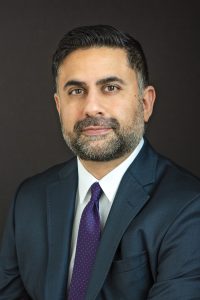
From left, Drs. Leon McDougle and Scott Holliday
Inconsiderate and unprofessional communication in the clinical learning environment can harm trainees, patients, and all members of the healthcare team. It is critical that trainees have support from peers and attending physicians in creating a humanistic culture.
To help prepare trainees and faculty to address such inconsiderate and unprofessional incidents, The Ohio State University College of Medicine implemented Bystanders Skills Building into their graduate medical education orientations in 2022 and 2023. The training was designed to encourage all trainees to notice and address unprofessional moments.
Through their Picker Gold GME Challenge Grant, Drs. McDougle and Holliday, working with co-investigators Jaclyn Gish-Lieberman, EdD, Senior Instructional Design Specialist, and Joanne Vakil, PhD, Senior Research Specialist, will broaden this innovative training from the original intervention guide to add two “just-in-time” resources—a mobile app and badge—that give clinicians immediate support when handling distressing situations. The mobile app will display evidence-based intervention techniques and highlight their use in authentic healthcare scenarios. In addition, the badge will provide a constant visual reminder of the intervention techniques shared in the mobile app. This novel approach will be expanded beyond orientation to Grand Rounds, which will reach all departments.
After developing prototypes for these resources and gathering feedback during a pilot phase, the researchers will share the badge and mobile app with approximately 350 trainees and 350 attending physicians across 19 clinical departments at the OSU Wexner Medical Center. In total, their initiative will enhance the learning environment and healthcare provided for thousands of ambulatory and inpatients annually. Drs. McDougle and Holliday will use surveys and interviews to assess the program’s impact.
Implementation of a Novel Community-Residency Collaboration: The Med/Peds – YAP Longitudinal Partnership | University of Minnesota

Dr. Aarti Bhatt
Dr. Bhatt’s work focuses on the creation of a community preceptorship model, using a patient and community member’s lived experience in the teaching and evaluation of residents. This innovative approach will create opportunities for trainees to learn from community experts and center the education of resident trainees around principles of equity, patient voice, anti-racism, and humanism.
Dr. Bhatt’s project will link the Internal Medicine and Pediatrics Med/Peds Residency Program at the University of Minnesota and the Youth and AIDS Projects (YAP), a nonprofit organization housed in the University of Minnesota’s Department of Pediatrics, in a new four-year longitudinal program. For over 30 years, YAP has provided community services focused on HIV and sexual health to young people ages 13 to 30. Its broad range of services includes HIV medical case management, prevention, education, and empowerment. Currently, in Minnesota, people of color make up 65% of new cases of HIV, and about 40% of new HIV cases involve people under the age of 30.
Over the course of four years, residents will be embedded within YAP to learn about HIV education, patient care, service, and advocacy. Structured time at YAP will be built into residents’ clinical schedules. The main areas of focus will include relationship building and engagement with the community-generated curriculum, as well as rotations with case management, treatment adherence, health education and risk reduction, and legislative advocacy teams. Residents will also learn how YAP works with other HIV and social service organizations to connect patients with resources.
The community-preceptor model is interprofessional and highlights the value of diverse perspectives in providing humanistic patient care. This unique program will aim to demonstrate the impact that community partnerships can have on physician training, patient-centered health communication, whole-person care, and the ability to address social and structural determinants of health that lead to health inequities.
Led by Dr. Bhatt, the project team includes Mike Aylward, MD, Med/Peds Program Director; Gage Urvina, Med/Peds YAP Partnership Coordinator; and YAP staff members Val Rubin-Rashaad Crutcher, Executive Director; Andrew Schuster, Director of Operations; Raquelle Lenoir, Lead Case Manager and Director of Community; Oceane Lune, Director of Community Engagement; Briana Jackson, Client Services Coordinator; and Calla Brown, Medical Director.